AI Pedagogy for High School Education
A one-year train-the-trainer AI pedagogy program designed for high schools, empowering teachers to responsibly integrate artificial intelligence into teaching, guided by Harvard SEAS academic leadership and delivered by IEG Global Association.
Why AI Pedagogy Matters Now
Artificial intelligence is already reshaping how students learn, write, research, and make decisions, often outside the classroom and without guidance. In this reality, the question for schools is no longer whether AI should be addressed, but how it should be taught, guided, and governed.
IEG Global Association offers a one-year train-the-trainer program designed to help schools and teachers to build internal sustainable capacity for teaching with AI in a responsible, pedagogically sound, and internationally aligned manner.
This program focuses on pedagogy curriculum integration and teacher confidence rather than short-term workshops or tool-specific training. It supports teachers in moving beyond reactive policies toward intentional instruction, helping students develop judgment, responsibility, and critical thinking with clarity, confidence, and purpose.

First AI Pedagogy
The program is the first comprehensive AI curriculum that brings together AI fundamentals, applied use cases, ethical considerations, and interdisciplinary thinking into a cohesive learning framework designed for secondary education.

14+ Years of Experience
For over 14 years, we have designed and delivered advanced academic programs for high school students in collaboration with leading global institutions, including Stanford School of Medicine, Harvard SEAS, Columbia Business School, California Institute of Technology, and other leading institutions.

Built with Domain Experts
Our programs are developed in collaboration with educators, researchers, and industry professionals, including Dr. Anas Chalah and Esther Wojcicki, ensuring academic rigor and real-world relevance.

Training Future Educators
We support teachers through structured training and resources, enabling them to confidently deliver future-ready curricula in diverse learning environments, across international and cross-disciplinary contexts.
Academic and Curriculum Authority

Dr. Anas Chalah
Dr. Anas Chalah, Assistant Dean for Teaching and Learning at Harvard John A. Paulson School of Engineering and Applied Sciences (Harvard SEAS), a 2023 Harvard Heroes Award recipient, and a dedicated educator, leads the technology and innovation content for the program. He introduces participants to emerging fields such as artificial intelligence, automation, and sustainability technologies, and explains how these advancements shape modern society. Drawing on his leadership role at Harvard SEAS, Dr. Chalah provides direct academic guidance and ensures the curriculum effectively bridges secondary education, university readiness, and evolving AI ecosystems.

Esther Wojcicki
Esther Wojcicki, renowned education visionary, American journalist, educator, and Vice Chair of the Creative Commons Advisory Council, widely known as the “Godmother of Silicon Valley,” is an internationally respected leader in education innovation. She has extensively studied the intersection of education and technology and is the founder of the Palo Alto High School Media Arts Program, one of the most influential student media programs in the United States. As a content adviser for AI Pedagogy for High School Education, she brings decades of experience in student-centered and project-based pedagogy, with a strong emphasis on leadership, ethics, and real-world learning.

Dr. Paul Shih
Dr. Shih, the Founder of IEG Global Association, the Model Entrepreneur® Competition (MEC), and Methena® Inc., leads a global vision that bridges education, entrepreneurship, and technology. Drawing on nearly 30 years in education, he has built and led advanced programs for high school students in collaboration with world-class institutions including Harvard SEAS, Stanford School of Medicine, Caltech, Columbia Business School, and Berklee College of Music. His mission is to translate elite university-level thinking into rigorous, age-appropriate, and scalable secondary-level curricula that prepare students for leadership in an innovation-driven world.
Program Overview
- The program is delivered over one academic year through a structured progression of learning, practice, and leadership development.
- Delivery includes online seminars, guided classroom implementation, peer collaboration, and optional in-person workshops.
- Participants include selected teachers, department heads, IB coordinators, and instructional leaders who will become internal AI teaching leaders within their schools.
Audience and Outcomes
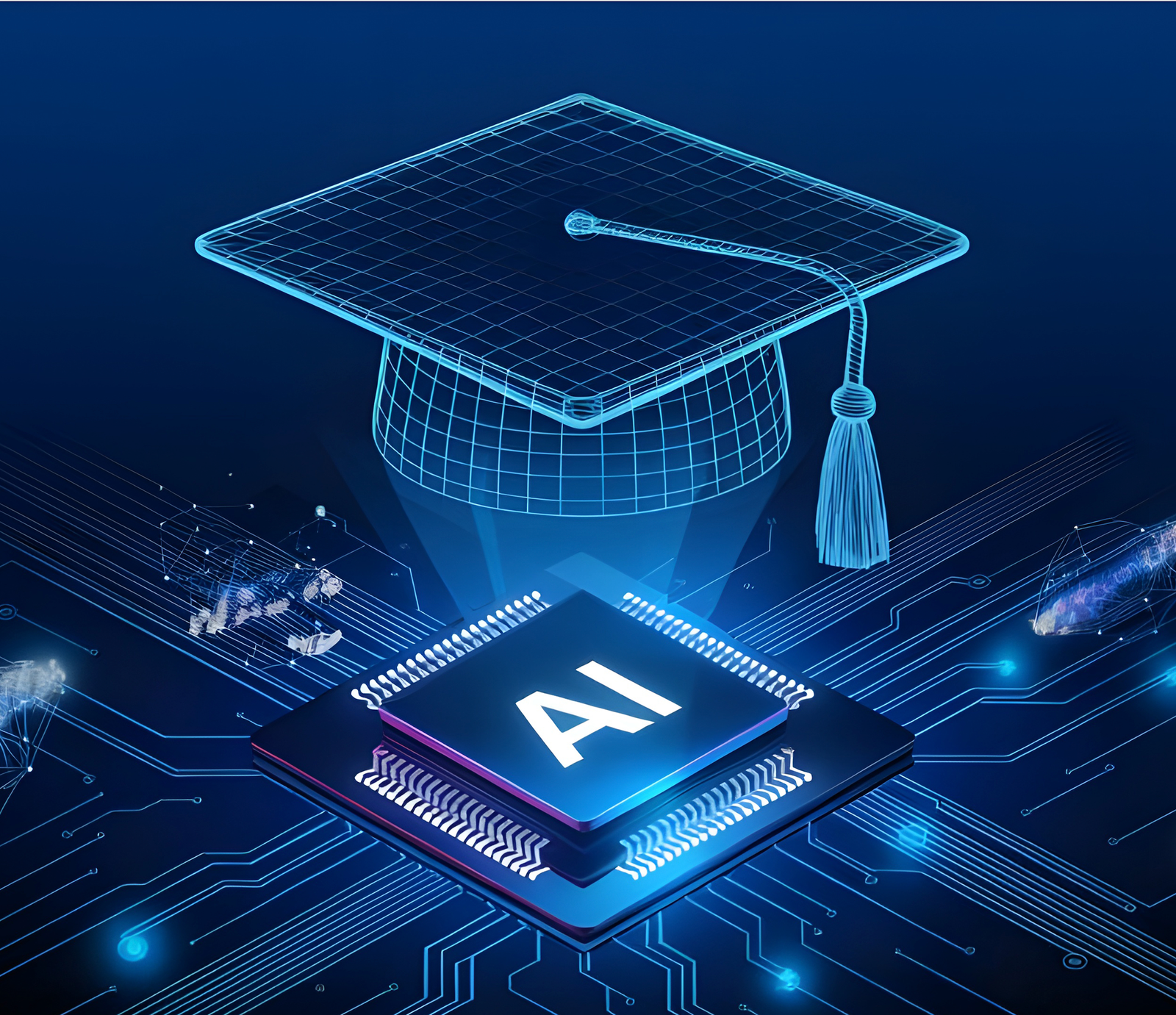
This section outlines who the training is designed for and the practical outcomes educators and schools can expect. It highlights the intended participants, the skills educators will gain, and the broader impact on teaching practice and institutional readiness.
Who This Training Is For
This program is designed for:
- High schools offering IB, AP, A-Level, or U.S. curricula
- Schools preparing students for competitive global universities
- Institutions seeking long-term faculty capacity building rather than one-time workshops
- Schools that value thoughtful, ethical, and academically rigorous AI integration
No prior computer science background is required.
What Educators Will Gain
Participants will gain:
• A clear framework for teaching AI concepts in age-appropriate ways
• Practical strategies to guide student use of AI responsibly
• Lesson and activity models adaptable across subject areas
• Effective approaches to assessment, originality, and academic integrity
• Confidence communicating AI expectations to students and families
No prior computer science background is required.
What Schools Receive
Schools will receive:
- A structured one-year AI pedagogy and curriculum integration framework
- Professional development delivered by IEG under Harvard and Silicon Valley-level academic leadership
- Classroom-ready strategies adaptable to IB, AP, A-Level, and U.S. curricula
- Certification of completion for participating educators
- A repeatable internal model for future teacher training
Core Training Focuses
The program emphasizes how to teach with AI rather than promoting specific tools or platforms.
For more information, please contact info@ivyedugrp.org.
Through this curriculum, teachers will:
-
Learn how to explain AI concepts at an age-appropriate level.
-
Learn how to design lessons and assessments that use AI to strengthen critical thinking rather than replace it.
-
Learn how to address academic integrity, ethics, and responsible AI use.
-
Learn how to design project-based learning experiences that integrate AI across subjects.
-
Learn how to lead internal AI curriculum conversations and train other faculty members.
Curriculum Structure

The AI Pedagogy for High School Education program is delivered through a four-phase learning journey that combines pedagogical foundations, collaborative design, classroom application, and knowledge sharing. The structure is designed to be flexible and may be delivered online or through blended formats, depending on the cohort and regional context.
Phase 1: Foundations Bootcamp
This phase establishes a shared foundation in advanced teaching and learning practices.
Participants explore:
- Core principles of advanced pedagogy, including cognitive science, active learning, flipped classroom models, and mastery-based progression
- Technology integration for teaching, such as artificial intelligence tools, immersive technologies, gamification, and digital assessment methods
- Ethics in education, with a focus on academic integrity, inclusive pedagogy, and character-centered instruction
- Case studies highlighting global best practices in innovative and responsible teaching
This phase builds a common language and framework for AI pedagogy across disciplines.
Phase 2: Innovation Incubator
During this phase, participants collaborate in interdisciplinary teams to design classroom innovations.
Key components include:
- Team-based development of ethically grounded instructional strategies
- Guided planning and brainstorming sessions focused on instructional design, equity, and student character outcomes
- Regular coaching and office hours with academic consultants
- Access to digital platforms, prototyping resources, and expert guidance
The Innovation Incubator emphasizes thoughtful design before classroom implementation.
Phase 3: Pilot Implementation
In this phase, participants apply their designs in real classroom settings.
Participants will:
- Pilot their instructional strategies within their own schools
- Engage in peer observation and reflective feedback cycles
- Examine instructional quality, classroom culture, and responsible AI use
- Collect qualitative and quantitative data on student engagement and learning outcomes
This phase ensures that pedagogy is tested in authentic educational environments.
Phase 4: Showcase and Knowledge Transfer
The final phase focuses on reflection, sharing, and scalability.
Participants will:
- Present outcomes, challenges, and lessons learned from their pilot implementations
- Reflect on ethical considerations and instructional impact
- Contribute to a shared best practices toolkit designed for broader school adoption
This phase supports long-term institutional learning and the transfer of knowledge beyond individual classrooms.
Contact Us
Subscribe
Contact
+1 800 965 9379
info@ivyedugrp.org
5214F Diamond Heights Blvd #3322, San Francisco, CA 94131